When Payments System Design assumes Connectivity
Are Registered Mandates Inclusive Enough?
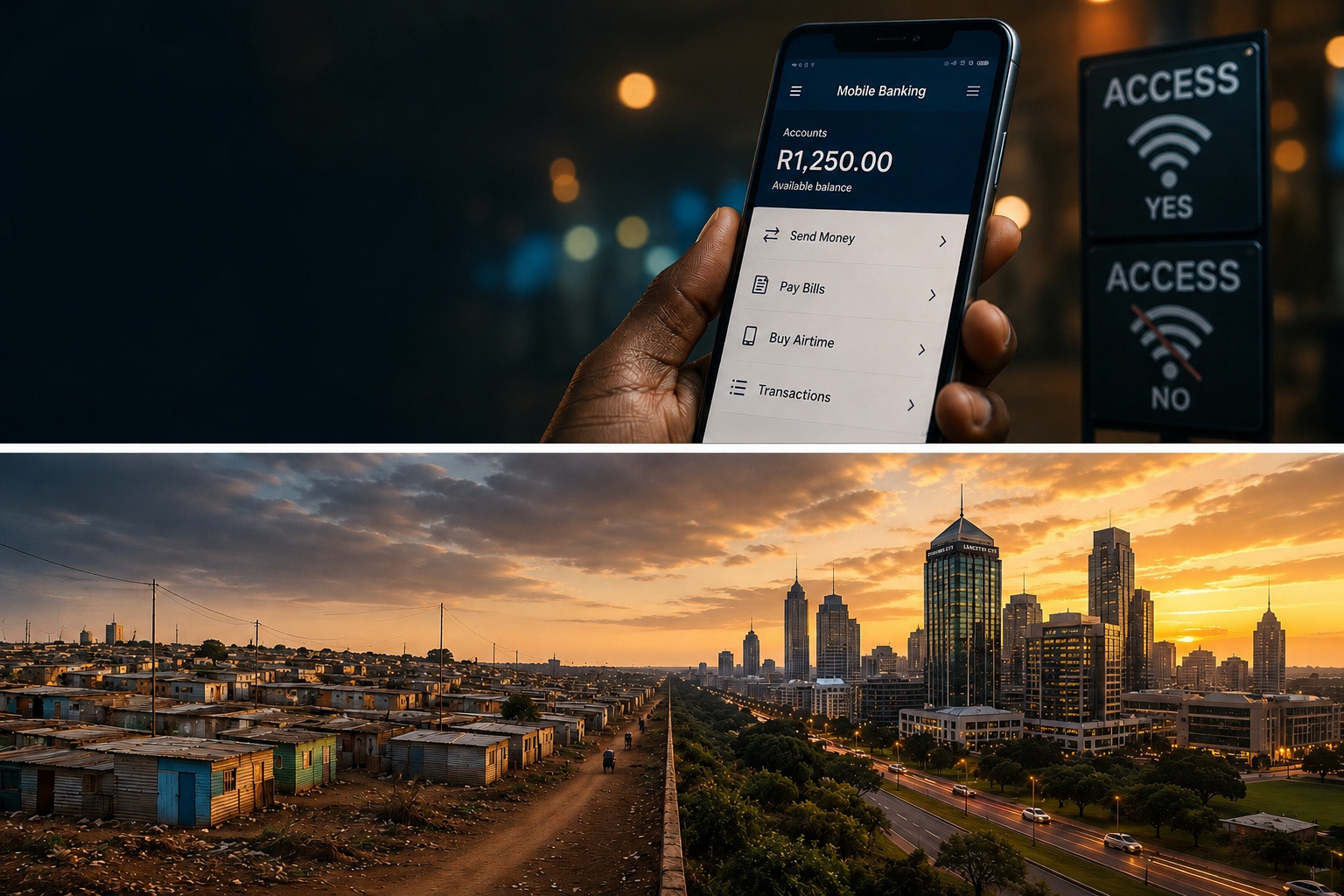
South Africa’s payment system infrastructure is continuously evolving, with payment frameworks reviews and enhancements being introduced to bring efficiency and remediation. Yet in a country with diverse socio-economic challenges, digital access and financial literacy are not uniformly experienced.
What then happens when the systems evolve faster than the consumers can keep up?
On the 12th of May 2025…
South Africa’s payments landscape under the oversight of the South African Reserve Bank (SARB), introduced Registered Mandates (RM). A payment rail that enables creditors (businesses) to collect on pre-agreed debit order contracts from a consumer’s bank account without requiring real-time authentication. The RM payments framework was introduced to remediate longstanding vulnerabilities raised around legacy debit order systems, with the intention to serve as an enhancement that strengthens mandate governance, transparency, creditor accountability, and overall system integrity.
From a technology perspective, RM represents a shift towards embedding upstream controls into payments infrastructure. While the framework is in principle, designed to strengthen reliability and reduce complexity, its effectiveness is not solely dependent on technical robustness but on the assumption of consumer digital access and on their ability to interact with mandate notifications in real time.
While RM may be operationally efficient, it does raise critical questions:
1. Are consumer protection benefits that are presented by RM experienced consistently across South Africa’s diverse socio-economic landscape?
2. Does the system inadvertently privilege digitally enabled consumers while it structurally disadvantages households with limited digital access, that remain vulnerable to exclusion or financial harm?
Digitally Enabled Users Versus Those Without Access
For digitally enabled consumers, engagement with enhancements to payments infrastructure is relatively seamless, offering convenience and agility. As notifications are received almost instantly, mandates can be reviewed, cancellations can be processed through mobile apps, and disputes can be initiated without visiting a branch.
This segment of consumers also has access to interact with chatbots and multiple service channels to maneuver queries. On the other hand, for a substantial segment of South Africans, access is far more constrained as it remains outside of formal digital banking ecosystems either by choice or circumstance, thus relying on basic transactional accounts, USSD channels, and physical branch infrastructure. This challenge is particularly encountered by social grant dependent households, where in some instances, an entire household’s income is administered by the South African Social Security Agency (SASSA). In his 2025 State of the Nation Address, the South African president Cyril Ramaphosa highlighted that more than 28 million vulnerable individuals are social grants dependents, this constitutes to approximately 44% of South Africa’s population.
In such circumstances, when an RM collection is administered, it can render an entire household in an undesirable state of depletion of funds that were intended to sustain the household for the month. RM collections occur in the evening collections window, outside of operating hours. As a result, that would mean consumers with limited digital access are required to visit a branch to cancel or dispute mandates. This limitation introduces delays in resolving collections, added transport costs, and additional administrative barriers. These challenges are much more prevalent in rural and peri-urban areas where branch accessibility is limited.
Although post-collection remediation is available through reversals and disputes, the time lag between collection and redress may cause significant hardship for some consumers. It is in these instances that consumer protection operates in principle, but not consistently in practice.
Does Digital Enablement = Understanding?
The assumption would be that the digitally empowered consumers fully understand their financial obligations and mandate-related processes, however, this assumption can also be skewed as digitally connected users may also struggle with payment terminology and find the complexities of mandate structures difficult to understand. For many individuals, particularly those outside financial fields, payments terminology such as “mandate permutations”, “upstream controls”, “collection windows”, or “authenticated collections” may be terms they do not fully understand and may be misaligned with how these elements relate to their financial wellness. It is therefore imperative that avenues towards enhanced client education are investigated; including multilingual communication on all platforms, simplified explanations in banking applications, and proactive outreach, would be beneficial in helping consumers better understand their rights and obligations.
To strengthen inclusion for both digitally enabled consumers and those without access, further research is required targeted at understanding the various socio-economic issues facing South Africa’s diverse population with specific focus on banking. Efforts such as connectivity programs, roadshows, targeted education initiatives could serve as a starting point and an enabler.
A Call to Action:
Reimagining banking apps to use home languages and clearer payment terminology could bridge the gap between system design and consumer comprehension.
Modernising South Africa’s payments infrastructure remains essential for strengthening efficiency, integrity, automation, and security; all which are critical resilient financial system. However, technological modernisation may inadvertently marginalise users when system design assumptions do not reflect lived realities.
The central challenge lies in aligning infrastructure design with the advancement of genuine inclusive outcomes catering to diverse user capabilities and in understanding how systems are experienced at the margins and not only at the centre. As South Africa continues to refine its payments infrastructure, further research into the interaction between mandate-based systems, digital access, and user experience would be beneficial. By understanding these changing aspects, it can inform further enhancements to infrastructure design and ensure that consumer protection evolves not only in principle, but in lived effect across the South African landscape to strengthen the trust in South Africa’s payments ecosystem for all users irrespective of how they access it.
Ultimately…
the RM framework solves a technical problem, but it also reminds us that technology can introduce human challenges if access, understanding, and equity are not prioritised.