Understanding Your Payment Types
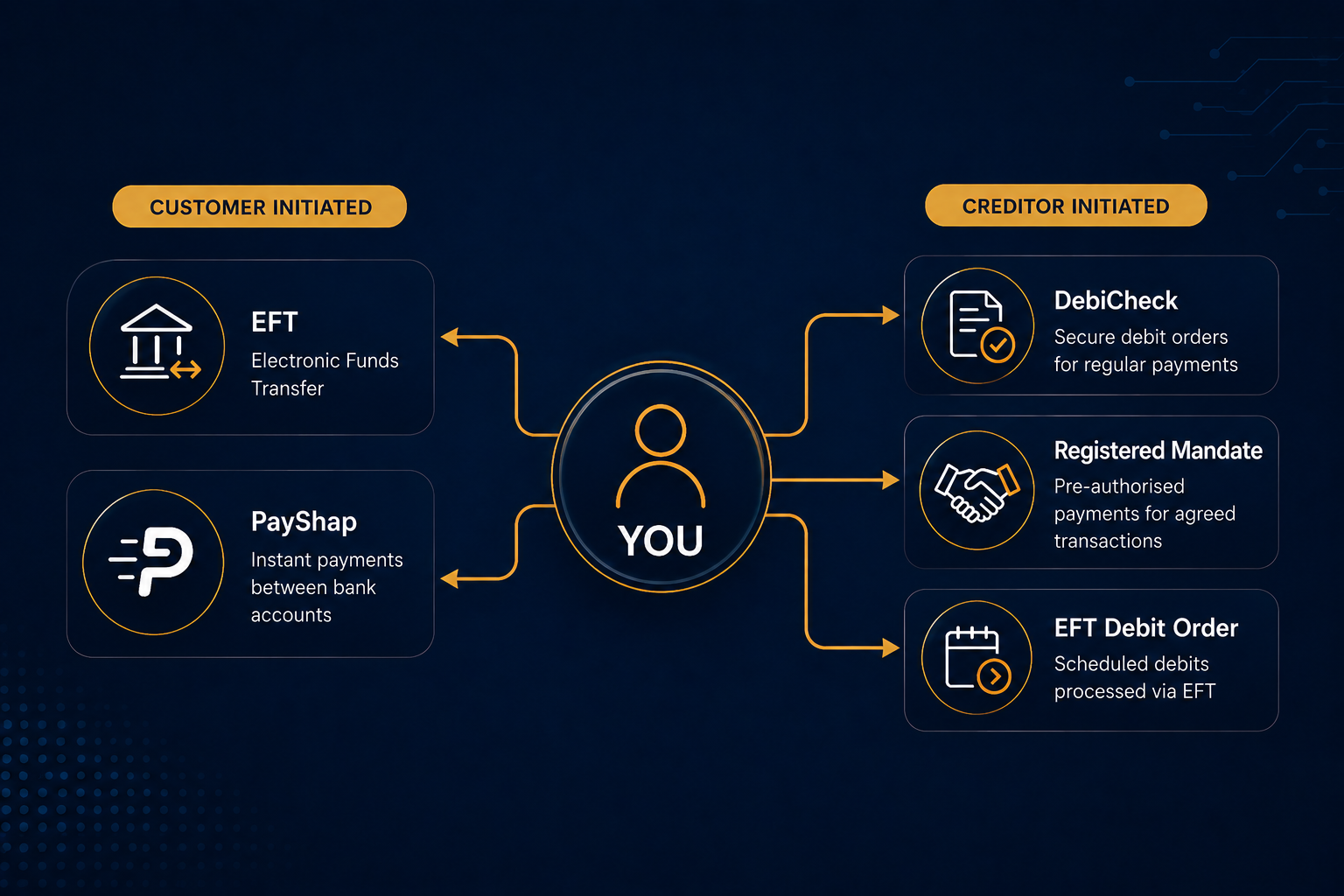
A debit order is a payment collection initiated by a creditor based on a contractual agreement between the creditor and the client. Allowing funds to be automatically deducted from the client’s bank account. South Africa’s payment landscape includes several common instruments such as EFT, EFT debit orders, Payshap, Registered Mandates, and DebiCheck (Authenticated Collections), each with different features, risks, and protections.
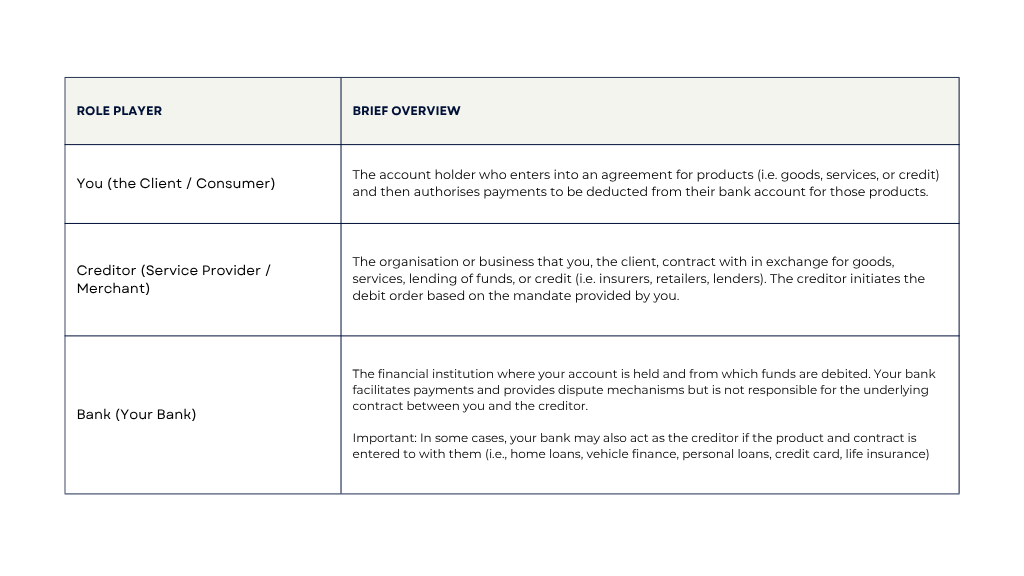
Who is Who in a Debit Order Arrangement:
To better understand how debit orders work, it is important to know the roles of all parties involved:
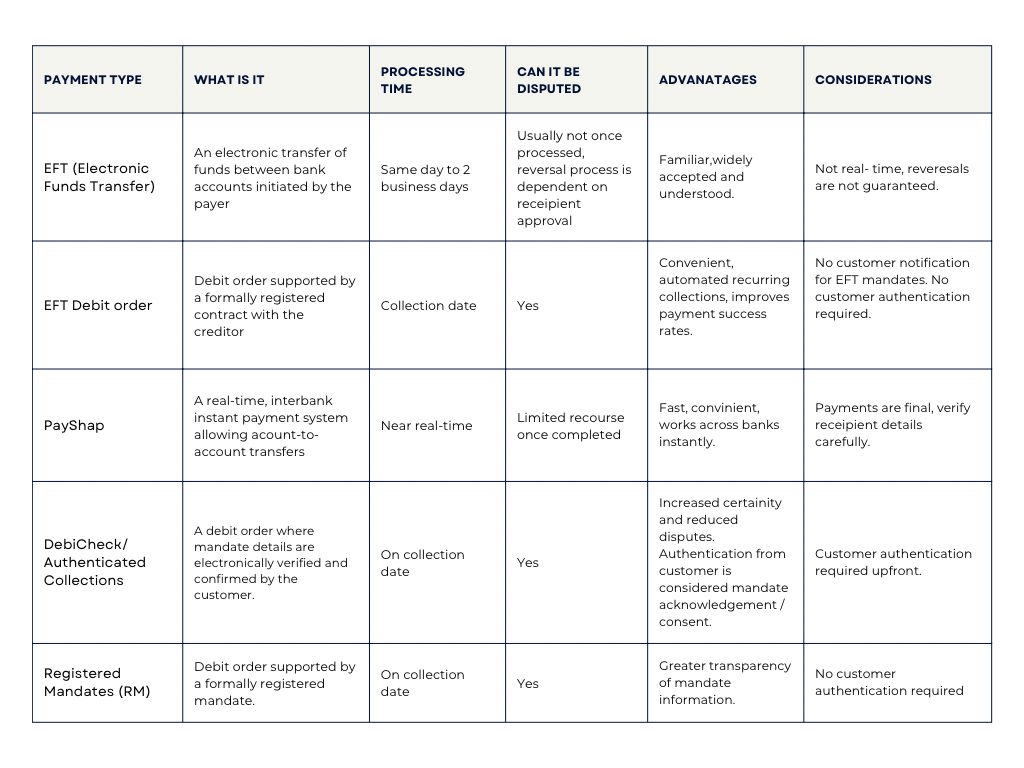
Payment Types Overview:
What to do when you want to dispute a debit order
Step 1: Determine your banking profile
Establish whether you are:
Digitally enabled (comfortable using banking apps and online platforms), or
Prefer assisted channels (branch or contact centre support)
Step 2: Use your preferred banking channel
You can log a dispute through:
Mobile Banking
Internet Banking
Bank Branch
Contact / Call Centre
Banks have enabled self-service dispute functionality to improve accessibility and turnaround time.
Step 3: Provide required information
When logging a dispute, ensure you have:
Date of debit
Amount
Creditor name
Reason for dispute
This information enables the bank to process the dispute efficiently.
Step 4: Monitor Progress
Track the dispute outcome via your banking channel
Respond to any additional requests
Important:
if the dispute is logged as fraudulent, a fraud investigation process will be initiated and may require a SAPS case number. Your respective bank will then walk you through their fraud process.
Understanding the 60-Day Dispute Rule
Effective 13 April 2026, the South African payments industry introduced a standardised 60-day dispute window for debit order instruments (EFT, Registered Mandate, and DebiCheck)
The 60-day period starts the day after the debit order is processed.
Disputes within this period are typically processed automatically.
After 60 days, banks will generally no longer accept disputes, and customers must contact the creditor directly.
This change was implemented to ensure consistency, transparency, and efficiency in dispute handling across the banking industry.
When to Contact your bank vs Your Creditor
Contact your bank when:
You want to dispute an unauthorised or incorrect debit order.
The debit occurred within the 60-day dispute period
You suspect fraud
Contact your creditor directly when:
The 60-day dispute window has passed
You need to cancel or amend your contract
The debit order is valid but incorrect in terms of service delivery
Tip: Your bank assists with payment disputes and fraud, while your creditor manages contracts, services, and billing issues.
Common Misconceptions
Logging a dispute does NOT cancel your contract with the creditor
You remain responsible for honouring your agreement with service provider
Failure to pay may negatively impact your credit profile
Banks are not responsible for contractual obligations between you and the creditor
It is always recommended to engage your creditor to ensure your payment terms and agreements are accurate and up to date.
Key Takeaway:
Understanding your payments type helps you:
Choose the right payment method
Know your rights and protections
Act quickly within the allowed dispute timeframes.
Disclaimer: This guide is an original educational resource. Additional industry, as well as your respective bank, can be consulted for more in-depth guidance. You are encouraged to explore the list of references below.
REFERENCES:
Payments Association of South Africa (PASA). Debit Orders Overview. Available at: https://pasa.org.za/pasa-resources/pasa-debit-orders/
Netcash. South Africa Debit Order Dispute Rule Change (60-Day Rule). Published April 8, 2026. Available at: https://netcash.co.za/blog/south-africa-debit-order-dispute-rule-change/
Nedbank. Dispute a Debit Order FAQs. Updated April 13, 2026. Available at: https://personal.nedbank.co.za/learn/help-centre/dispute-debit-order.html
Stitch Money. What is DebiCheck? South Africa’s Guide to Authenticated Debit Collections. Published March 14, 2025. Available at: https://stitch.money/blog/debicheck-the-ultimate-guide